Is it green or greenwashing? This series looks at the sustainability practices of reader-nominated brands. For more details on the project and a bit about my background, the project page is here. This piece focuses on Wild Rye.
For years, I’ve taken nominations for Green or Greenwashing brands and I’ve focused on the big brands. They’ve got huge volume and huge sourcing teams – they can meet any minimums and buy any fabric from any supplier. Their large teams should have compliance expertise on board to guide sustainability claims (rarely the case). Any shortcomings are simply lack of care and effort; it’s easy critique.
But one of you has been nominating Wild Rye for years. And it’s different. The Patagonias and Reformations and Urban Brands of the world are doing hundreds of millions or billions of dollars in revenue per year. Wild Rye’s under ten million.
So given my findings (spoiler) that they’re really solid, I think it’s important to add the context that they’re a small brand. They don’t have all the volume that comes with a men’s side of the business. They don’t have the volume of making a bunch of “outdoor lifestyle” vibe-y stuff that tends to be margin-rich. Many of their 2010s era, women’s outdoor clothing brands have folded post-pandemic. They’re probably working 10 times as hard as the big guys to make choices that deliver performance and quality to customers, and minimize environmental impact, and meet financial goals. And from the outside looking in, it seems to be going really right. Do they have Patagonia’s venture capital arm that’s backing nylon recycling R&D? No, but I would not be surprised if they’re on that kind of trajectory as they grow.
With that, here’s how they stack up against my 5 main tenets of sustainability:
They use more sustainable fiber types: recycled synthetics, closed-loop semi-synthetics, and regenerative natural fibers.
Yes. Out of ~130 products, only 4 stand out for virgin synthetics: two chamois / bibs and two jerseys (here and here). I was curious about how common recycled fibers were for tight, thin performance bike shorts, and it turns out that many of Wild Rye’s competitors are using recycled materials. For the jerseys, they tend to focus on the merino content (11% of the front/main body fabric), which feels a little too generous.
But the other 97% of their assortment looks great. I was especially impressed that they use recycled materials or organic cotton in accessories like hats. Generally, those niche categories are outsourced afterthoughts. This is where I find most “sustainable” brands slapping their branding on whatever’s convenient (see Halfdays, Strafe, Stio, Seniq). Seeing that consistency across their assortment helps me parse out which brands hold sustainability as a company value vs. a marketing tactic.
Most of their assortment is synthetic active / outdoor gear, and a fairly even split between recycled vs. bio-based synthetics. Recycled fabrics tend to have a lower carbon footprint. Bio-based delivers a more durable end product and still skips fossil fuels. I think they both have their time and place in product development depending on the garment’s intended use.
A few pieces in the assortment use organic cotton or Lyocell, an evolution on rayon and viscose that is closed loop, avoids employee and community exposure to harmful chemicals, and delivers a more durable end product.
Pieces are built for the long haul: not only are pieces physically durable, but they’re durable in the face of trend cycles. They’ll be relevant in your closet for years and capture strong resale value if they’re cycled out.
Wild Rye is one of few companies talking about the relationship between product longevity and sustainability. Most brands have an interesting relationship with durability; they want you to see their products as high quality, but they’re careful not to discourage a kit refresh in a season or two. Wild Rye’s Impact page essentially says “if you buy quality (us), you can buy less overall.” It’s subtle, but in an apparel landscape pushing consumers to consume as much as possible, it’s unique.
Are they actually durable? I always check by reading reviews and doing a “Poshmark test” (how do garments look at mid-life?). Reviews are generally positive – most are well over 4 stars and only a few had multiple quality criticisms left from customers. Secondhand listings also looked good – basically a given for synthetics, but the two used wool listing didn’t have issues with pilling or fuzzing (though no telling on how heavy that use was).
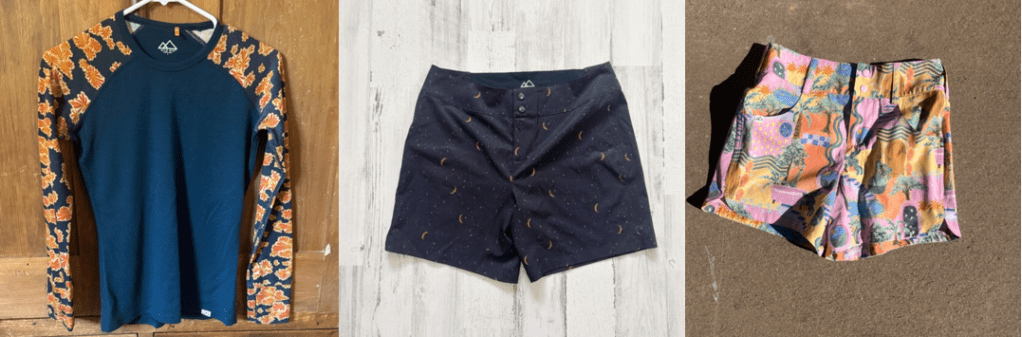
Aesthetically, Wild Rye has a branded style that’s been largely consistent over 10 years in production. Trendiness is subtle: a little more mustard and rust during the “warm organics” era. More butter yellow and lavender in the current “pastels slowly getting brighter over the years” phase. No play with trendy silhouettes (anoraks, cropped puffers) outside of a few crop tees and tanks (at least more practical than cropped winter layers).
They make the occasional claim that they’re “runway inspired” or “fashion driven” – largely on older marketing materials. I see them more as a foil to day-to-day fashion. The trend cycle’s endlessly accelerating. I’m somehow never in the “right” cut of jeans. We need to look feminine, but also project a “serious” image at work or “put together” as mothers. To me, Wild Rye is an escape from that: fun, vibrant, youthful, sometimes even a little silly – but all while being a practical and reliable choice. Getting dressed is somehow both fun and easy. So many women’s brands tout themselves as a blend of function and fashion. To me, Wild Rye’s aesthetic departure from the ebbs and flows of fashion is a perk.
They follow regulations on how to market green initiatives. They don’t rely on generalized, debatable terms like “eco-friendly” or “sustainable,” and instead use fact-based language that’s reflective of their actions.
Great execution here. I only realized how invested Wild Rye was into recycled & renewable materials while doing research for this piece. In a market where customers want a fast & convenient yes-or-no answer about a brand’s ethics or sustainability, Wild Rye doesn’t lean into it. They could probably sell a few more bike shorts and ski jackets by making blanket eco-friendly claims, but Wild Rye steers consumers towards the fine print. Last year’s Earth Day post? They want you to read their full Impact report – what they’re doing well, how they can improve. Pieces like their Lil Party Shirt that are a recycled/virgin polyester blend (with higher percentages recycled)? List it in the fabric content, but not worth calling out in the description. It takes more attention and effort to determine Wild Rye’s sustainability performance, but the phrase is “environmentally conscious” for a reason.
The current standard in the apparel space is to find ways to maximize environmental credit with as little work as possible. It’s nice to see a brand almost under-market and overdeliver.
They’re clear on how products are made and how to best dispose of them: transparency about the brand’s green claims builds trust with consumers.
I like that Wild Rye has a resale site. One, you can’t do that without durable goods. Two, it’s like a cheat code between producing top tier quality while still having a solution for affordable pricing.
I would like to see Wild Rye add to this space as they grow. Their warranty program currently only offers store credit for the value of the item. It’d be cool to see them add repair services (especially since so many gear fixers are women-led small businesses too).
In the meantime, I would love to see more low/no cost post-purchase support. Most of Wild Rye’s current customers are seasoned athletes, well-versed in product care, but I expect that to change with expanding brand awareness. Add the ski kit care instructions to the FAQs and add some advice on cadence (so many skiers think they’re going to lose waterproofing from laundering). How do I deal with chamois stank? Can I soak them in a vinegar solution like the rest of my synthetics? Best way to mend lightly damaged items? NoSo Patch? Iron on? Does it depend on the item?
Wild Rye might not be a common choice for someone’s first ski jacket, but it could definitely be someone’s first big outerwear investment that they don’t want to mess up.
They don’t play games with customer demand. Merchants have some tricks and gimmicks to manipulate customer demand: short term promotions, limited time offers, limited quantities and “a few units left” messaging. Sustainable brands give customers the time and space to decide whether they really want an item without creating pressure and mark down what’s left at the end of the season.
Some sale activity around Black Friday & Cyber Monday, but not overly sensational (sitewide, over a week to consider purchases. There’s no rapid cycling of discount rates or products to manufacture urgency or scarcity). Off-season goods go to clearance.
There is some inventory badging for items with low stock (under ~5 units). It’s orange and visible, but Wild Rye skips any exclamation marks or fire emojis that other brands use to juice more excitement and anxiety out of the stock alert.
 FemiGnarly
One thought on “Wild Rye: Green or Greenwashing”