Is it green or greenwashing? This series looks at the sustainability practices of reader-nominated brands. For more details on the project and a bit about my background, the project page is here. This piece focuses on Finisterre.
Here’s how they stack up against my 5 main tenets of sustainability:
They use more sustainable fiber types: recycled synthetics, closed-loop semi-synthetics, and regenerative natural fibers.
For most brands, it only takes a few product clicks to find unsustainable products. Finisterre, however, really made me hunt. I can briefly list out every exception: First, they occasionally use virgin polyester in a jacket lining or hood lining. Second, some virgin rubber and polyurethane are used in small percentages in wet suits and swimwear. Third, they make a bra and underwear set with “Tencel Viscose.” Lenzing, the company that owns the Tencel portfolio, doesn’t market a viscose product. The closest is Tencel modal, a fabric that’s stronger than viscose and less harmful to garment workers and garment communities. It might just be a quirk of US vs. UK labeling rules. Either way, it’d be even better to use Tencel lyocell, which is a closed loop process that doesn’t result in harmful chemical waste at all.
Other than a small handful of items, the rest are natural fibers and recycled synthetics. They also make a point to use organic cotton or take things a step further with regenerative cotton. Regenerative cotton restores soil health by rotating crops, minimizing tilling, and increasing biodiversity to keep the land healthy and productive long term.
My only wish is that they’d pursue GOTS certification for organic fibers. There’s a lot of fraud in organic cotton trade. In the US, the USDA partners with GOTS for supply chain traceability. Their supply isn’t always perfect, but surveillance and investigative teams have been effective at identifying fraudulent suppliers and removing them from their program. The UK lacks regulations for organic fabrics. You’re either trusting your vendor or sending your own team to audit farms. Now, Finisterre seems to get all of their cotton pieces from Turkey, which has some history of organic fraud, but not to the scale of India. And their supply chain is small – 12 factories compared to 40-60 at Patagonia and 1,100+ at H&M. This size of business model makes it easier to build deeper business relationships and get boots on the ground to see the upstream farms and mills. But the American in me loves a third-party certification.
Pieces are built for the long haul: not only are pieces physically durable, but they’re durable in the face of trend cycles. They’ll be relevant in your closet for years and capture strong resale value if they’re cycled out.
First, let’s talk physical durability. Reviews are wildly good. It almost feels too good to be true, but their handful of reviews on 3rd party retailers are also fairly complimentary. There are no duds. Lowest rating I saw was 4.6 stars for a sweater with some bobbles (that’s British for pilling). Every brand I’ve worked for has the occasional flop, so I don’t know whether to be impressed or skeptical.
Another thing I like to do to check quality is look at used items on Poshmark. It’ll show whether there are common problems. Finisterre items look good, but surprisingly wrinkled (which can be a sign of poor fiber quality). And it includes fabrications that don’t wrinkle easily, like corduroy, herringbone, and French terry. But again, it’s rarely paired with actual signs of wear or damage. And if I toggle to “sold” items, they look significantly better. My reader specifically asked my thoughts about sweaters, so I’ll also note that pilling issues are few and far between.
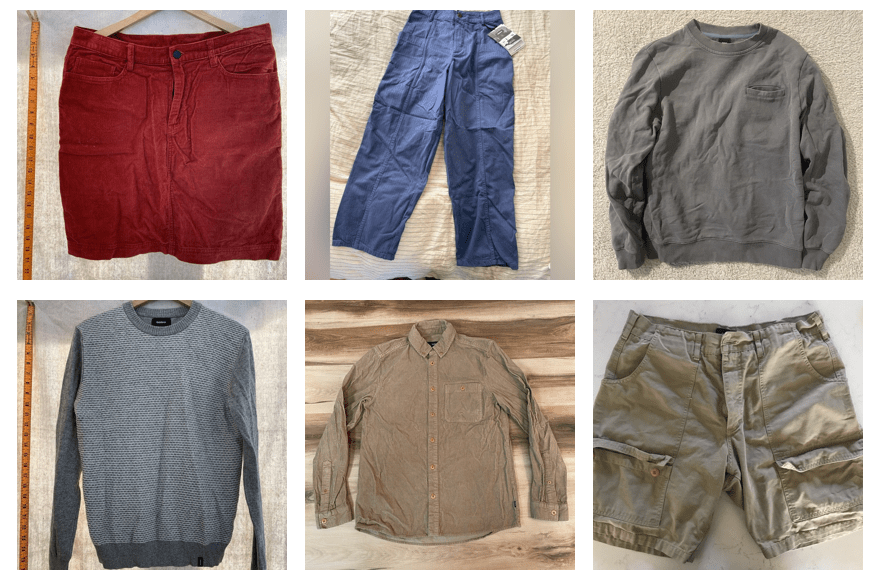
In terms of styling durability, their designs lean classic. They also resonate with a long term workwear macro-trend that rose around 2018-2019 and will likely have a couple more seasons of relevance. Looking at mid-2010s lookbooks, the silhouettes are a little slimmer and a little more classically “British seaside.” They play a bit with trend, but it’s subtle and rooted in “the classics” of some sort. The item with the shortest trend cycle is probably their barrel jeans and trousers.
They follow regulations on how to market green initiatives. They don’t rely on generalized, debatable terms like “eco-friendly” or “sustainable,” and instead use fact-based language that’s reflective of their actions.
This is where I’m most impressed by Finisterre. For all of the sustainable choices they make, they brag about them very little. Their product pages stick to the facts – this is what’s recycled, this is organic, these animal fibers are traced.
On their brand pages, they make very fair self-assessments. They’ll say they’re consciously built, enduring, practical, and B-Corp certified. But they acknowledge that making apparel is a consumptive industry. It doesn’t matter who they source from or what fibers they work with, there is inevitably an impact on the planet.
They’re clear on how products are made and how to best dispose of them: transparency about the brand’s green claims builds trust with consumers.
Finisterre favors simplistic styles that don’t need much explanation. We understand cotton, wool, and recycled polyester. They only have a handful of technical garments, largely in the rainwear and hardshell category. I think they could greatly improve their product content for those items – what membrane are they using? What testing method did they use to land on their waterproofing/breathability scores? Are we being honest when we talk about “re-proofing” hardshell layers, or is it more honest to speak to membrane and DWR topicals, how they work together, and how to maximize the lifespan of both?
For disposal, Finisterre has great resources – a resale site, a repair team, and ample information about DIY care and repair.
They don’t play games with customer demand. Merchants have some tricks and gimmicks to manipulate customer demand: short term promotions, limited time offers, limited quantities and “a few units left” messaging. Sustainable brands give customers the time and space to decide whether they really want an item without creating pressure and mark down what’s left at the end of the season.
This is another place where I’m floored by Finisterre. They have a clearance page. It’s empty. At least in the US, outdoorsy apparel sales have been soft post-pandemic. Stocks are down. Layoffs have hit every major brand. Clearance racks are stacked. So it’s wild to see a brand end clean on last season’s inventory.
For in-season promotions, they lightly incentivize bulk buys with a “buy 2, save 10%” message on tees and run a small discount for joining their email list. They also have a creative spin on Black Friday (or Blue Friday for them). Instead of discounts, they give $2.50 per purchase to ocean non-profits. It’s not much money – likely on par with the 1% For The Planet campaigns other companies run all year round. I think the REI and Patagonia approach of opting out is a bolder conversation about sustainability and frenzied consumption. But it’s still challenging norms in a less dramatic way.
Bonus notes:
I noticed that Finisterre lists “Transported by Sea” or “Transported by Road” on most items. Air freight has gotten more common with fast fashion and old US de minimis policies that exempted those items from tariffs. Air freight has a much larger carbon footprint per-item than vessel, rail, or ground freight. However, Finisterre sneaks in smaller print that they’re “avoiding air freight wherever possible.” It’s always possible. I wish they’d be more specific here – what circumstances do they deem “impossible” (like timing delays for seasonal product where they air freight a few weeks of supply and vessel the rest). What percentage of units end up being air freighted? It’s one of those green claims that’s vague enough to leave room or unsustainable practices.
Likewise, when I look at the “Impact” information for their Miir items, they tout “Food Grade Stainless Steel” (with a “fork, knife, spoon, straw, and chopsticks” – despite the items being a standalone mugs/flasks). Inaccuracies aside, food grade stainless steel isn’t a green, impact-related feature. When brands try to spin any and every feature as a sustainability claim, it puts me on high alert for greenwashing. It’s only a few third-party items, but it makes me skeptical about their other valid eco-claims.
 FemiGnarly
One thought on “Finisterre: Green or Greenwashing”